Showing posts with label training. Show all posts

Wednesday, March 27, 2013

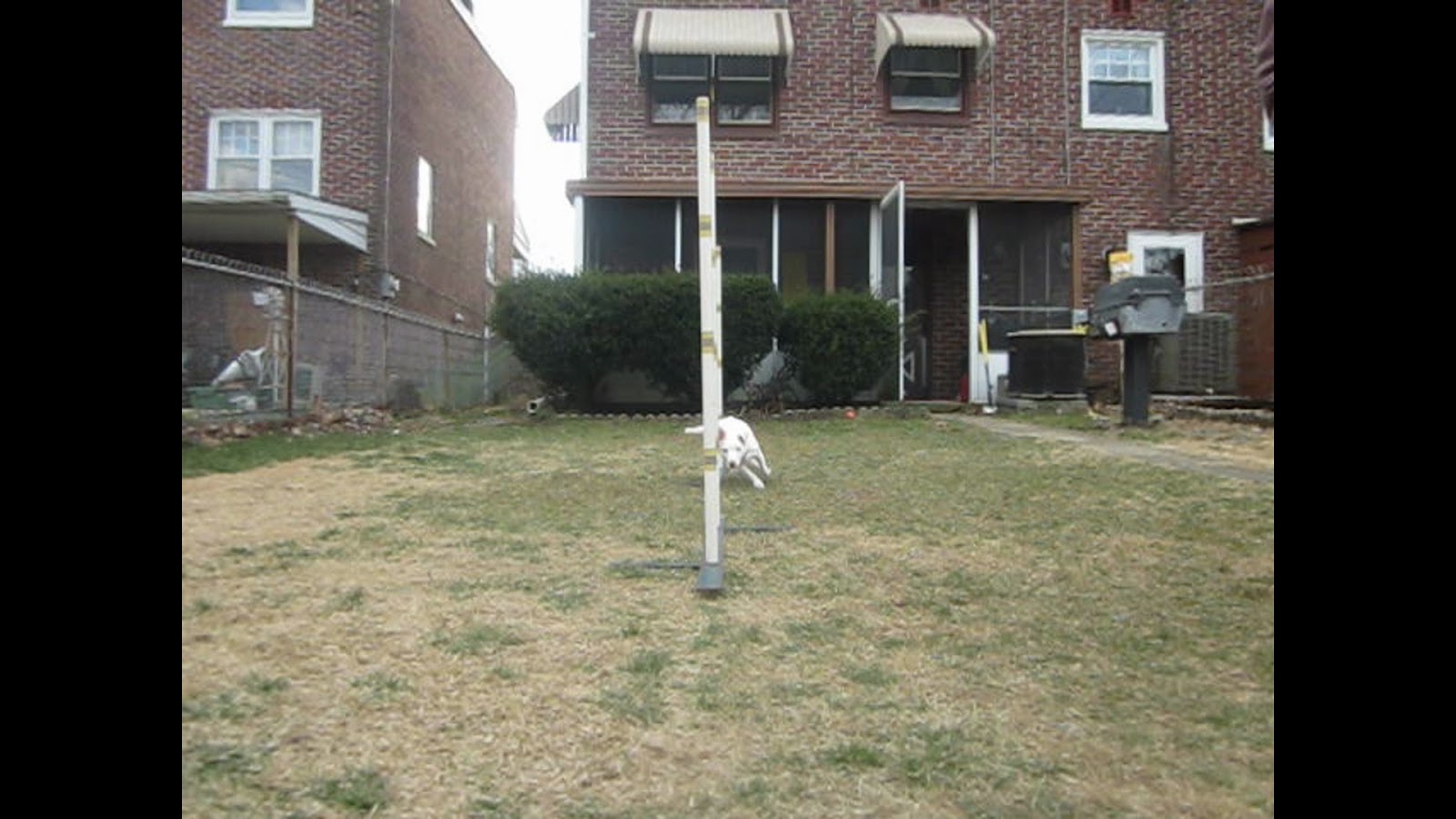
Weaves 102x2 (or 6)


So two days ago I wrote a blog post with video clips detailing all the steps I've taken in Hokey's weave training starting from the very beginning all the way up to the point where I was ready to add the 3rd set of 2x2s for a total of 6 weave poles. Then the WORST happened! It snowed.


Okay...so it wasn't the worst thing in the world. Despite my lamenting the ceaseless winter, it actually melted quickly and I was out there the very next day (yesterday) to resume our training. And that meant adding the 3rd set of 2x2s.

I introduced the new set by placing it a few feet in front of the set of 4 poles. Then I ran her through a couple of times from both sides. Gradually I moved the new set closer and closer to the other 4 poles.


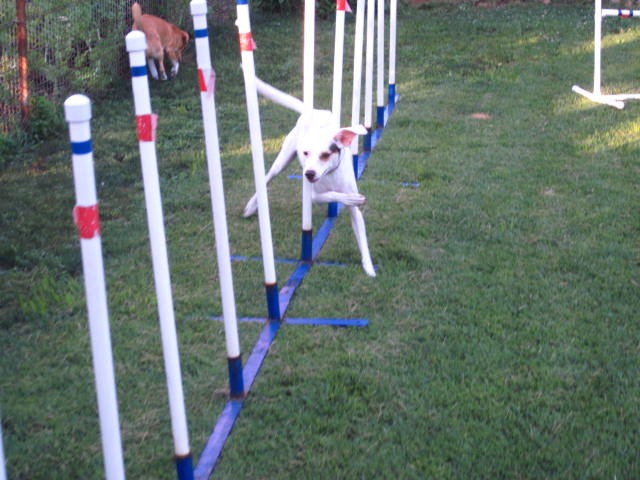
Eventually I joined the new set with the old set of 4 poles and that's when the magic happened. Suddenly I had a dog that was weaving 6 poles!


So now that I have a weaving dog, what's next? Well, I want her to have independent obstacle performance regardless of my position or motion (or lack thereof). So we will continue to do some exercises with me sending her from various locations. For example, one thing I'm working on for independence is to send her ahead of me. We struggled a little with this at first; she would do the first 3 or 4 weaves then stop and look at me because she was unsure. Most dogs, particularly green ones, find lack of handler motion a bit perplexing. But being deaf, Hokey is probably a little more reliant than the average dog on my motion and/or keeping me in visual range. But we worked through it. Here she is sending ahead of me to complete the weaves. The fact that she is willing to go on ahead of me to complete them is a huge step. The confidence will come.


I will continue to do some Around-the-Clock exercises to work on difficult angles of entry, as seen here:


I will also be introducing motion and handling into the picture at this stage. Once Hokey is confidently performing 6 weaves independently with and without motion and consistently hitting her entries from all angles of approach, I will introduce a 2nd set of 6 poles and work up to the full set of 12.

Monday, March 25, 2013

Weaves 101 (or 2x2)


Searching for spring
I had put off training Hokey's weaves for several months because of winter. In my opinion, to properly train weaves and progress quickly, you need to be able to work a little bit each day. Winter brings cold temps and the possibility of varying amounts of snow and, since I don't have the space in my house to set up 6 weaves, never mind a full set of 12, I decided to put it off until early March thinking I'd be safe weather-wise by then. After all, last year by mid-March, it was 80 degrees and I was mowing my yard. Looking out my window today on the 25th, with the snow coming down and a couple of inches already on the ground, I'm questioning the wisdom of my decision. However, I've already invested a little over 2 1/2 weeks into the process. Hopefully this will melt quickly and not affect our momentum and the progress we've achieved thus far. And I guess if I can't be out there training, I can at least write about it.

I had great success using the 2x2 method of weave training with Poppy a couple of years ago, so decided to use it again to train Hokey. However, with Poppy, I had used the "older" method where the 2x2s are set at angles and gradually moved to the straight position -- like channel weaves. This time, I decided to use Mary Ellen Barry's 2x2 method instead. An article outlining her method was published in the April 2009 issue of Clean Run and can be found, here, on the KineticDog website. This method puts the emphasis on teaching correct entries from multiple angles of approach. The sequence of screen capture snapshots below show Hokey approaching and entering the weaves from a sharp angle that requires her to wrap around the 1st pole, thereby demonstrating her understanding of what constitutes a correct entry even at this early stage in her training:


I wanted to document our progress, not only for the sake of this blog, but should I be in the position to be training another dog sometime in the future, it will be there to help guide me through the steps again. I suspect Hokey's progress, although not slow by any means, may be slightly slower than the average dog due to her deafness. I don't really want her looking at me as I want her focus to be on driving forward. Yet she is unable to receive any kind of auditory feedback, so she must rely on learning more by trial and error than a dog that can hear would. She does have a fairly low threshold for frustration though, often expressed with a loud snort, which requires us to take a break and do something else.


I believe I started Hokey with step 1 on March 6th or 7th and I did not document this step with video. It simply consists of shaping the dog to pass through the poles of a set of 2x2s by standing at one end and tossing treats for the dog whenever it passes through the 2 poles. Direction doesn't matter at this point. You simply want the dog to understand the value of passing between the 2 poles. However, you want to move quickly to the next step once the behavior has been established.

Step 2 begins by establishing direction - i.e. the dog learns that from now on the correct way to enter the weaves is with its left shoulder passing the 1st pole. At this point you always want to have your dog approaching the 2x2s from one direction; you do not want to turn around and come at them again from the direction you just came (i.e. "back weave"). Because of cold rainy weather, I began the 1st couple of steps in my basement, which is plenty big enough for the first couple of steps, but unfortunately appears to have been last decorated circa 1978.


Once direction is well-established and your dog is consistently hitting the entry you can move on to part B of step 2 which teaches your dog to wrap around the 1st pole at increasingly sharper angles of approach by gradually moving the 2x2s from a straight on approach to a perpendicular approach. Here is Hokey demonstrating this step:


Once the dog is successfully hitting the entry to the 2x2s at the above stage, you can start to move on to the Around-the-Clock work. The first stage consists of you and your dog moving around the set of 2x2s as if they were set with the 1st pole pointing toward 6 on a clock and the last pole pointing toward 12. You and your dog work all angles of approach in an arc from 6 - 11 clockwise and 6 - 1 counterclockwise. At this point you always have your dog by your side and may do a restrain and release.


The next step is to work Around-the-Clock positions where you are stationary but releasing the dog from various positions that don't require any actual handling. The following video shows me working Hokey on both sides from ONE of these positions. I had trouble with my spare camera battery dying on me, so was not able to capture some of the other positions, but the Clean Run article mentioned above shows the positions to work on.  


Once the dog is hitting the entry well from the various positions, it's time to add another set of 2x2s. To do this, first place the 2nd set in line a few feet from the 1st. Send the dog through the first set and reward immediately after. Then send the dog through the second set.


Quickly fade the reward between the two sets then reward the dog for  performing both sets together. Even though the dog is performing both sets at once, they should still be considered two separate obstacles, so you are actually moving with your dog to the 2nd set instead of remaining stationary.


Once the dog is moving through both sets of 2x2s, start all of your Around-the-Clock work again both with the dog at your side and then releasing from various positions.


Next, gradually start to move the 2nd set closer to the first and repeat the steps above.


Eventually the 2 sets of 2x2s come together and you start to see something that looks like weaving! Continue to work the various positions like here:


And here:


So that's where Hokey's training stands as of now. I believe I am ready to introduce the 3rd set of 2x2s into the mix so we will have 6 poles. That is, IF it stops snowing and it all melts away. 


Thursday, February 28, 2013

Flying Frame Update


Just a quick update from what I posted a few days ago. I worked Hokey on the A-Frame again today and concentrated on getting her to jump the apex, rather than scrambling over it like she was doing on Sunday. I placed a jump bar at the top of the frame to encourage the behavior and it seemed to work the majority of the time. It looks like she's getting 2 strides on the upside rather than the 3 she was getting on Sunday. However, on the decent, she is putting in a short stride between landing over the apex and pouncing into the box. I guess I'll see if that starts to fade as she gets more experience and gains more confidence. I think this is pretty good for only her second time on the frame though.


Monday, February 25, 2013

3-2-1 Contact Training (with Serps & Pinwheels too)


 Hokey's agility training has been coming along. While (im)patiently waiting for spring to arrive, I've recently been able to get access to a nice building and equipment to practice on once a week. And it's only ~10 minutes from my house. Deb Goodhart rents the building about once a month to give lessons, so we've been doing that as well. I'm so appreciative to finally have an opportunity to do some training that doesn't involve traveling to the ends of the earth!


I put together a couple of clips of just a few things I was working on during our practice sessions. The first shows us doing some rear cross on the tunnel work, learning to drive through the chute and just fooling around running a little sequence -- a "real" one.


The following week, I worked her on some serps. It was only the 2nd time she'd done real serps. The first had been about a week before in my backyard. We still need a little work on timing and teamwork and her ability to consistently read the serp RTH when I add motion, but I thought she did stunningly overall considering how green she is. I also show a bit of a rear cross exercise at the end of this. Rear crosses are something we are still working hard at and still need a lot of work, but I was happy with what she did here. It's coming along. I was doing some exercises with her in my backyard this evening and after a small initial struggle, she started to really pick it up well. We'll continue to work at it.


Hokey has had a couple of initial introductory sessions on the teeter now, with the ends set on tables. During the first session, we just let her run back and forth to get treats at either end. Then we dropped one of the tables so that one end had about a 12" drop. She was unfazed. She couldn't seem to turn around fast enough to run to the other end to get her treat, even if it meant jumping up on the end and riding it down first. Of course, being deaf, the banging noise is out of the picture for her. But the motion doesn't seem to worry her.

Here is the end of our second session on the teeter. I am not teaching her any "end behavior" yet, however I am trying to train her to pause on the table at the end of the teeter as I move ahead. Since she is relatively fearless and tends to be at the "less" end of the self-preservation scale, teaching her to use her brakes now is probably a good idea. So here she is playing her favorite teeter ping-pong game:


She's been working the A-frame grid well for some time now, although admittedly I haven't been able to do it consistently during the winter months. But every time we do work it, she's been working well. So I decided it was time to introduce the actual A-frame into the equation. We've played the "mountain climbing game" on one side of the frame a couple of times to build up her hamstrings and teach her that she's able to control her decent. And she's run over it a couple of times at full height on the way to something else of her own accord (deaf dogs simply don't listen to "Don't do that until you've been trained how" and the "uh-uh-uh" as they forge ahead with their own agenda). But for a true introduction, we lowered it and I put my PVC box on. The first couple of times up and down, she was pretty tentative and unsure, like here:


So we decided to set up the ground grid next to the frame to remind her of what it is all about and give her muscle memory a boost.


That was all fine and good, so I switched back to the frame. Or at least I tried to. Suddenly, she was all "Frame? What frame? I don't see any huge, looming piece of wood directly in front of me". Even when Deb tried a restrained recall, she did a run-around.


Then she finally took the plunge up and over, proceeding to leap completely over the contact zone and box. But...she did a great job tackling the frame.


So now we were ready to put it together. As you can see, Hokey hasn't made the connection and generalized the striding from the ground grid to the frame yet. She's still getting used to the idea of running up and down it at this point. I know she's capable of opening up her stride more and she needs to learn to leap over the top rather than scrambling over and down until pouncing through the box, as she's mostly doing here. She may need a jump bar or something clamped to the top in order to help aid her in transferring the striding she learned on the ground grid to the frame. We'll see. But this isn't too bad considering it's the first time working the frame for this wee little pup.


We also worked some pinwheel exercises in my lesson this week. Since we are new to sequencing and with Hokey still being VERY green, her obstacle commitment is not always there and she apparently still needs quite a bit of support. I'm sure this will lessen as she gains experience and confidence. Here we are doing a straight pinwheel. Without a lot of support, she is pulling off jumps instead of committing:


Here we are doing the exercise without the send to the middle pinwheel jump, so that she understands that where I place my body relative to the plane of jumps tells her whether to take the pinwheel jump or not. Not taking the pinwheel jump isn't a problem, but she is so sensitive to my pulling motion that she almost misses the 3rd jump without me giving her a little extra push back out to it.


 Next, adding a front cross between jumps 4 and 5 after the pinwheel. I spent too long supporting her pinwheel jump and was late for my cross the first time through. The second time was much better. Of course, part of training a new dog, especially when you start to put it together and run some sequences, means learning how to come together to work as a team.


Then we did the pinwheel with blind crosses. The first run was pretty nice. I was a little too early on my cross in the 2nd run. The 3rd was much better timing-wise, even though she ended up dropping the bar.


Our last blind cross ended up being pretty nice though. Bonus: she doesn't even look at the off-course trap jump set up near the 3rd and 4th jumps:


We haven't started any training for the dogwalk and haven't even been able to resume the groundwork for that was put on hold for the winter. (confession: in another don't-try-to-tell-a-deaf-dog-no moment, she has been up on the full height dog walk of her own accord a couple of times. Like I said, she is fearless. I have been VERY conscious of keeping her away from the full-height teeter however).

I plan on starting 2x2 weave training sometime in March.


So that's the update on Hocus Pocus training. More to come soon as the warmer weather allows us more training opportunities! 

Wednesday, January 30, 2013

Rainy Day and My Backyard-is-a-Bog Training

Hokey planted herself in front of the heat vent. It was cold!

This will be a short, but sweet post.
Between the weather being horrendously cold last week...
then snowing...
then warming up so dramatically the snow melted in less than a day...
then raining buckets...
so that my backyard has become a virtual bog,
I haven't had much opportunity to do any real training with Hokey.

What to do?

How about shaping a random behavior?
I am using a flashlight as my substitute clicker.


Wednesday, November 14, 2012

Foundations: Running Contacts


I finally have time to report on the progress I've been making with Hokey's agility foundation training. In fact, I have so much material, I'm going to have to split it into more than one post. This post will be dedicated to our attempts to develop solid running contact behaviors for both the A-frame and the dog walk. 

But first, let me report that we all survived "Superstorm Sandy" (I still prefer the pre-storm moniker "Frankenstorm") without any hardship. However, Hokey begs to differ with that assessment. She was convinced she'd melt by getting rain in her face. Is this not the most pathetic sight ever?

Hokey "suffering" the effects of Superstorm Sandy


So back to running contact training starting with the A-frame. I have introduced Hokey to the PVC box. The introductory step involved me sitting in a chair while shaping her moment into the box (i.e. first moving toward it, then a foot in, two feet in, etc) by building value for it with lots of tossed treats. She moved through those steps very quickly. Then I ran into some trouble at what would ordinarily be the next couple of steps - me still sitting in a chair off to the side of the box with her moving straight through without looking at me while getting a nice pounce into the box then bouncing straight out. Because of her deafness, I had trouble imparting this concept to her and actually ended up jumping ahead a couple of steps. The main problem is that I have yet to come up with a good alternative marker to use in lieu of a clicker.  Such a marker would need to be visual, yet not require her to look at me for information (i.e. some remote device that she would look at to get her information regardless of my position relative to her). It would also have to have very little delay so that the feedback would be virtually instantaneous. I've experimented with a couple of things, but none of them have worked out quite to my specifications. SO, I decided to jump ahead and see how she would respond to me working the 3 positions around either side of the box (front corner, side, back corner) with me tossing a treat or toy to keep her focused on driving forward. Being a bouncy jack, she naturally picked up on the one bounce into the box with a bounce straight out. She really gets some nice pouncing action, as seen in this still from the video that follows:

Hokey "pouncing" into the PVC box

And here is the video of us working the 3 positions around the box at full speed followed by half speed:


We've also started to work on the foundation for a running dog walk contact. I want to try to train this and see how it goes. So far, it's proving to be challenging and sometimes frustrating. I may need to rethink how I go about certain things, but I figure if it doesn't work out, I can always switch to a 2o/2o instead. I think it would be an easier transition to retrain a running to a 2o/2o contact behavior than the other way around. Currently I am using interlocking foam tiles as a portable substitute for a plank. They are 12" x 12", so 12 tiles represents a DW ramp and the last 3 tiles are equal to the USDAA contact zone specifications.
One of the interlocking foam tiles

When training a running DW contact, you want to teach your dog to drive forward with speed while remaining completely independent of handler motion. Therefore, in these early stages of training, I remain stationary and position myself at either end of the "plank". I have a remote controlled treat dispenser placed several feet from the end of the plank that acts as the "goal" for Hokey to drive to. I've also used a tug toy stuffed with hot dogs placed or thrown at the contact end of the plank. However, if I use the toy, I give up the control of rewarding her for a correct vs. incorrect performance since she's often driving forward far ahead of me. In other words, the toy reward is indiscriminate; it rewards her for performing both correct and incorrect contact behaviors. Therefore, I prefer to use the treat dispenser so that I can reward her only when she runs all the way across the plank without leaping off the end or stepping off the side. The downside to using the remote dispenser is that it has a little bit of a delay, so that sometimes in my eagerness to deliver the reward to her at the correct moment, I anticipate her performing correct behavior and instead end up rewarding her for an undesirable behavior.

Remote controlled treat dispenser
Unfortunately, as mentioned before, I haven't come up with a good clicker substitute with which to provide her with instant feedback for performing the correct behavior without her having to look at me, so, right now, Hokey is stuck with the imprecision of trying to learn what gets her a reward and what doesn't and trying to tease out what she did right from the wide range of possible behaviors. This is a currently source of frustration for the both of us and something I need to give more thought to in order to come up with a better solution.

Below are video examples of our hits and misses.

In this clip, I stand stationary at the "contact" end of of the plank near the treat dispenser and release her toward me:


I have found that she tends to show a little more speed and drive if I am at the opposite end with her and do a restrained release, sending her across the plank toward the dispenser, as shown here:


As I mentioned before, Hokey is a bouncy jack russell and has a tendency to add an occasional leap amid her strides as she runs. Sometimes these leaps carry her right into the contact zone, such as here:


However, this is not the most desirable behavior as it can easily turn into a leap that has her sailing completely over the contact zone:


A frequent problem I'm having with her is that she has a tendency to run off the side of the plank as she's heading toward the treat dispenser.


This is happening more often lately and I need to fix it now before it drifts into habit. My thought is that I either need to take some steps back and build high value for staying on the plank before running the entire length at full speed OR get a helper so that one person can be available to give some sort of visual "click" for the desired behavior. Or maybe some kind of combination of the two.

Like I said, it's a work in progress with some kinks to be worked out. We'll see how it goes as we move forward.

Another post on our progress focusing on other skills should be up within the next few days. Stay tuned!

Sunday, September 16, 2012

Building a Strong Foundation - RTH


I'm working on building a strong foundation with Hokey to eventually make us a better team when we start doing agility in earnest. Part of that foundation is working on the recall to heel (RTH) positions. We've begun working on 3 of them: the Foundation RTH, the Backy-uppy RTH & the Extension RTH. This isn't the "sexy" part of agility; it may seem as exciting as watching paint dry. However, RTH positions are important building blocks that will provide the firm foundation on which our teamwork will later sit.

The RTH positions teach her to respond appropriately with her body in accordance to my signals and position so that she begins to learn extension and collection and learns to face in the correct position so that we are both heading on parallel paths to the next obstacle; she will be able to predict where we're headed next based on learning what each of these positions means. Watching these videos, I am not always happy with the ending position of my legs & feet which should technically be together and pointing forward. This is definitely something I'll need to work on and a good example of why video taping yourself can be so useful when improving your training and handling.

For two of these three positions, I've found it helpful to use a wall or fence to help Hokey learn to keep herself straight in relation to my end position. Here we are working one of the positions (the Backy-Uppy RTH) where she starts by facing me and then turns and finishes next to me facing in the same direction that I am. I want her to hold this, and all, RTH positions until I release her.


Here we are working the same position over a jump.


Here I am working Hokey in another position (Extension RTH) where she is behind me and I call her so that she is in a heel position next to me. Again, I am using the fence as an aid to keep her straight. I also show her doing this over a jump without any aid.


The other position we've been working on is the foundation RTH. In this position you call the dog straight to you and turn so that you are both heading on a parellel path at a 90 degree angle from your dog's original position. If you are call the dog over a jump, this would mean that you would call your dog over the jump and then turn so you and your dog are parallel to the jump you just took. Unlike the previous two positions discussed, a fence or wall cannot be used as an aid to keep your dog straight. Instead, a chair or some other 4-cornered object that you can work the position around may be employed. I found a little plastic patio table worked great for this purpose (not shown here). Here Hokey and I work the foundation RTH using a jump.


There will be more RTH positions to add to our toolbox as our training progresses. Greater distance will be added as well, which will help Hokey to learn extension and collection.

Sunday, August 26, 2012

Trick Training - The Leg Weave

More than anything, I love training my dogs to do tricks. It cements our bond as we engage in a positive & fun activity together. Here is one trick my dogs find particularly fun: Leg Weaving!

You don't need to be involved in agility or have a set of weave poles in order for your dog to strut some fancy moves. How about training your dog to weave in and out of your legs?


Here is Poppy demonstrating:


Here she is again in slo-mo:


And Ollie strutting his stuff:


This isn't a hard trick to train - I train this one completely by luring and working step-by-step over several days time. I've been working on teaching this trick to Hokey for a few days now.

The first step is to have your dog sit & stay in heel position. Hold a treat in the hand on the opposite side from your dog. Step forward on the leg opposite your dog and stand still. Release your dog and, using the hand with the treat, lure them between your two legs. Make sure they end up next to the forward leg. The dog should be pointing forward as if it was going to move on ahead. This is where you want your "reward zone" to be - i.e. the place where you give the treat- do not reward for any other position. Here is Hokey demonstrating this first step:


The next step would be to take another step so that the dog is being rewarded for going in between your legs twice before it gets the reward. Again, make sure your dog is next to the forward leg and oriented so that it is pointing forward before giving the reward. Here is Hokey demonstrating this 2nd step:


As your dog begins to understand the game and is consistently moving into the correct position, you can add steps. Here is Hokey starting to put it all together. I am still luring her with my hands and she is hesitating between each step. As we continue forward in her training, the movement will smooth out and I will be able to fade the luring hands.


As your dog gets more experienced and smoother at this, you can add a turn. Here is Poppy demonstrating what this looks like.


And Ollie demonstrating the leg weave with turn:


And for the lazy trainer - how about just standing still and letting your dog do all the work? Here is Poppy demonstrating a figure-8 leg weave while I stand still.


Friday, August 17, 2012

Welcome to Hokey's Place


Another stressful week with little time to write any posts. However, the training goes on despite my lack of time to sit down and write anything about it. Here is a post on a behavior I'm introducing into Hokey's repertoire: "go to your place". This is a very convenient behavior to have if you are busy doing something and want your dog to stay out of the way, especially if you don't happen to have a crate handy.

The most common tool used to teach this is some sort of mat, but a towel, small blanket or even a dog bed, which is what I use for Poppy, works fine. It just should be something reasonably portable and easily recognized by your dog as "their" object. Every dog in the household should have their own designated "place". I bought Hokey a small cheap utility mat with non-slip backing for this purpose.


I am primarily training this through shaping and am currently in the middle of training the full behavior. It started with me laying out the rug in the middle of the living room and hand-flashing (my "clicker" since Hokey is deaf) her for interacting with it, eventually working up to reinforcing her for standing with all 4 feet on the mat. This actually turned out to be a speedy process as she was already used to putting all 4 feet on an object lying in the middle of the floor due to the shaping work we've been doing with the frisbee. From there, I gradually shaped her to sit and maintain good eye contact with me.


Next, I taught her to lie down on the mat. This was the only time I did not use pure shaping. This is because down is not a very natural behavior for Hokey to perform while we are interacting and was, in fact, the hardest of the basic obedience commands for me to train her to do. I felt trying to completely shape a down on the mat would take a long time and might try the limits of patience for both of us. Therefore, I did spend some time giving her the hand signal for down and reinforcing the resulting behavior on the mat. 

The end behavior that I'm working toward is for Hokey to respond to a hand signal telling her to "go to your place" by going to the mat and lying down and staying there until I release her. For example, this could mean when I'm ready to sit down at the table to eat dinner, I would be able to signal her to "go to your place" and she would make a bee-line to wherever I've laid her mat down and she would then lie down and remain there until I've finished eating and have given her a release signal. I could also bring the mat on the road with us - say to visit a friend or hang out at an agility trial. I could set the mat on the floor and she would have her own space to hang out. In such situations involving unfamiliar surroundings, having a default behavior such as this while making use of a familiar object (i.e. the mat) offers some security to a dog. 

As of today, my training of this has progressed to the point where Hokey is offering a sit with eye contact on the mat and going "down" on my signal. Eventually, I want her to recognize that when the mat is out and I'm busy doing something, she should be going to it and offering a default behavior. Right now, that default behavior is a sit, but I am working on turning it into a down and today I took steps to begin to shape that. 

I decided to get the mat out and place it on the floor right next to where I was sitting and working on a jigsaw puzzle. I made sure I had LOTS of treats close at hand to reinforce any desired behavior. Since this is new to Hokey, at first I reinforced her a few times for getting on the mat of her own accord and sitting. She was free to move about and I gave her no information about what to do other than to reinforce her when she got on the mat and sat down. 


Next, I gave her a short refresher on going down while on the mat by giving her the down signal a handful of times and rewarding her for responding correctly. 

Then I stopped giving her any information to see what she would do. She spent quite a bit of time standing or sitting on the mat and staring at me waiting for information that just wasn't coming. A couple of times she wandered off the mat, but she kept returning. She wanted to find out how to earn those treats! Then slowly the light bulb started to go off. You can see her working it out in her head in the following video.


Slowly she started to get the idea of what she was supposed to do. 


As Hokey gains confidence, her speed should improve. I did want to make sure I don't let her get into the bad habit of constantly getting up to repeat the behavior - i.e. I do not want her getting into a pattern of lying down, getting reinforced with a treat, then getting up and repeating the behavior in order to receive a constant stream of treats. The goal behavior is to have her down/stay on the mat for a period of time, so it is important to build duration in. Normally I build duration into a behavior very gradually, but as she was already showing some signs of falling into the habit of repeating the behavior for extra treats, I decided to mix it up a bit by randomly and generously rewarding her for staying in the down position and, every so often, not reward her immediately upon her going into the down position. This seemed to help her hold the down position. Also, it is important to make sure the delivery of the treat is given in such a way that it does not encourage the dog to rise from the down position. Give it quickly and just below the nose while they are in a down position. If the dog starts to rise in anticipation of getting the treat, make sure they go back down into position before releasing the treat.

Hokey and I will continue to work on this and before long she should be heading to her mat to relax and chill out while the world buzzes around her.


Thursday, July 26, 2012

Back Up That Booty!

Developing a sense of body awareness is an important skill in the foundation of an agility dog. I play a lot of free shaping clicker games which involve touching targets with different parts of the body or placing themselves in various positions (e.g. 101 Things To Do With A Box). I begin this early in my dogs' training so that by the time they start working obstacles, their proprioception is pretty well-developed. One of my favorite exercises for building rear-end awareness is to teach them to blindly seek out and climb objects behind them using their rear legs. The following videos, starring Ollie and Poppy, show the steps in this process. Just keep in mind that this is done in incremental steps - don't rush it. Dogs learn best when the training session is kept short (in this case, ~5 minutes) and repeated often before moving on to each new step.

First, I teach my dogs to back up so that both their hind feet are touching something flat on the ground. Since it will not see what it is backing onto, the dog will need to be able to feel a distinct difference between a correct position and one that is missing the mark. Therefore, it is important that there be a marked contrast in texture between the target where they will be placing their hind feet and the surrounding area.  Since I'm training on carpet, I use a flat piece of cardboard as my "target". If I were training on a wood, linoleum, or some other smooth surface, I would probably use some kind of non-slip mat as my target. With my use of the cardboard here, ideally I would affix one side with a non-slip surface in order to stabilize it on the carpet so it wouldn't slide around too much. I haven't done so here and you can see it sliding around - especially with Poppy as it goes shooting away from her at the end.

Here is Ollie repeatedly backing onto the cardboard: 


My dogs are already used to playing games where they need to move and place different legs in certain positions, so they know to reach around behind them to find things without me giving them any kind of verbal or visual cues. However, if your dog is not already used to playing body awareness shaping games, you may need to lure them into the correct position the first few times. To do that, have the dog stand directly in front of you with the target lying on the ground just behind the dog. Step toward your dog so that it moves backwards. As soon as BOTH back feet are on the target, click and reward. Repeat this several times. Once your dog seems to "get it" stop stepping toward them and see if they will step back on their own. Click and reward all successes. Once you have had several successful sessions, you can start to build distance so that they need to eventually take 3 or 4 steps back before their hind feet hit the target. Build this distance gradually over a few sessions.

Here is Poppy backing onto the cardboard. Generally, her preferred method of succeeding in this game is to cheat by approaching the target head on and then doing what I call a "swimmers turn maneuver" - kind of a pivoting hand stand where she kicks up her hind legs and swings her rear end around into the correct position. Here, while the target is flat, she is not quite so dramatic, but she does approach the cardboard once head on and then turns around into the correct position. I do not reward her for that.


Once your dog is consistently backing onto the flat target, you can start to add some height. Here I use a low box turned upside-down. Here is Ollie:


And here is Poppy. Notice, once again, that she tries the head-on approach a couple of times and doesn't get rewarded for it.


I did not feel the need to add several videos of the next steps, which basically involve increasing the height of the target. I use gradually increasingly sized boxes. Whatever you use, just make sure it's relatively stable so that it won't move around or be knocked over while your dog pokes his back feet around and hoists himself up.

Eventually you can add a verbal cue or hand signal to tell your dog back. Trick taught. Now go crazy entertaining your friends by having your dog walk backwards up a variety of objects. My dogs will walk their hind legs up just about anything - including people. Here they both are using my standard go to obstacle for this - the sofa:


Have fun & happy training!

Tuesday, July 24, 2012

Shaping Up - The First Session

Hokey had her very first shaping session today. I particularly love to incorporate the use of shaping into my overall training for two reasons:

1. The dog learns to think through situations and problem-solve. It is allowed to make choices and subsequently learn, through trial-and-error, which ones result in a reward and which don't. I love watching the wheels turn inside my dogs' heads as they try to figure out and work through what it is I want them to do. And it is especially rewarding when the light bulb goes off and the dog starts consistently repeating the desired behavior - you can see them bursting with pride and pure joy.

2. It's FUN! The dogs and I have a blast together when we do shaping exercises. It's a big game where we both win. My dogs can barely contain their excitement and I get so much enjoyment out of watching them experiment and experience a-ha moments. The process helps to cement our bond and makes us better working partners.

That said, I am not a free-shaping purist. I may have an abundance of patience, but still, not quite enough to use shaping as a method to train every little behavior.  I use positive reinforcement lure training in combination with shaping - especially for basic commands such as sit and down.

What I really like to use shaping for best is to help my dogs develop body awareness, to help them learn to interact with objects (i.e. more independence/less handler focus), and to teach new tricks.

Although I've incorporated some shaping into Hokey's basic training, today was our very first session of true shaping for the sole purpose of shaping's sake. Because of her deafness, she tends to be a little more handler-dependent and handler-focused than the average dog. Looking ahead to potentially training her for agility, I want to begin to shift her focus off of me a bit so she can 1) start to build value for interacting with objects/obstacles and 2) develop some independence. Additionally, I want to start building her body awareness.

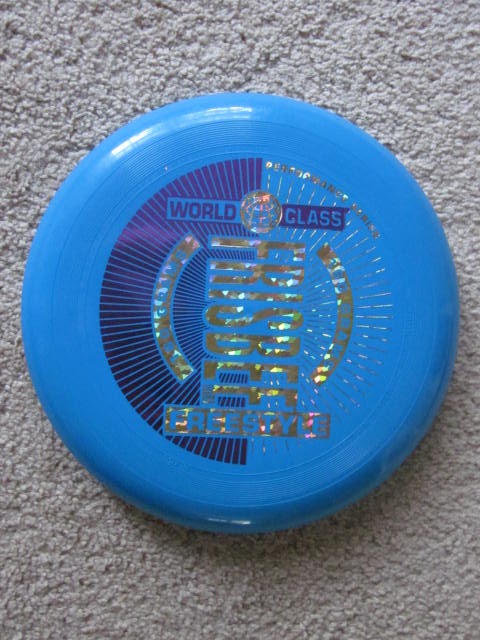
Normally, when beginning shaping sessions with a dog, I would start by using a box as the object with which they are to interact, as in 101 Things to Do with a Box. However, since I recently started nosework training with Hokey, which involves the use of cardboard boxes, I decided I should try something else as not to confuse her. Since she is small, I felt a plastic frisbee would do the trick. 

Unfortunately, I did not capture the very first steps of her shaping session on video. These involved her getting rewarded for any interaction with the frisbee: nose touch, paw touch, etc. Any kind of acknowledgment. She is a smart cookie and flew through those steps rather quickly, so I decided she was ready to take the plunge and actually learn a new behavior. I wanted to keep it VERY simple, so the behavior I chose was for her to stand with both front feet on the frisbee. Here is a video of our first attempts:


She caught on right away! I let Hokey think things through and never lured. That is the point of the game. Sometimes if one of my dogs gets really stuck while I'm waiting them out, I might move around the room to help "unstick" them, but never in a way that would result in them being lured into the desired position.

After a short break, we were back at it. At first, I was preferably delivering my rewards while she was still in the desired position. However, once she "got" the game, she showed some reluctance to put much distance between herself and the frisbee between repetitions, so I decided it was time to start throwing the treat away from the frisbee to move her off.


With Ollie and Poppy, I either use a clicker or my substitute clicker word, "Yes!". Obviously, with Hokey's deafness, neither of those is an option. Instead I use a hand flash. I may also give her an "OK" sign AFTER the hand flash and treat reward, to let her know how pleased I am. Of course, I want to try to deliver my hand flash, followed by the reward, the split second she performs the behavior (i.e. as soon as both front feet are on the frisbee). This is where there might be a slight disadvantage with her deafness in that,  if she doesn't happen to be looking at me, I am unable to get the timing correct and, therefore, this may result in a delay between the behavior and the hand flash, as shown in the following clip (slowed down) where she is sniffing the carpet as she performs the behavior before she looks up at me.


But, overall, she caught on to the game and I consider it a successful first session.


BTW - I don't know what that silly little move of her putting her head upside-down between her front legs is all about, but I love all my dogs' funny little quirks.


Sunday, July 22, 2012

Deaf Dogs Do Bark - Part 2

In Part 1 of my discussion of the latest edition to my pack, Hocus Pocus a deaf Jack Russell Terrier, focused on her just being a normal dog. She is. But when training a deaf dog, there are special considerations to be taken into account, which I will go a little here informed by my short experience working with Hokey.

To reiterate from part 1, deaf dogs are absolutely capable of understanding and learning just like any other dog. I can't emphasize that enough. I had posted this link of my working on training her in my first blog entry, but feel I should share it again here as proof:
 Hokey Training
Most of what she is demonstrating in the video was taught to her within the short time frame of 1 - 2 weeks.  I use hand signals - many of which I just made up. I like to keep things simple and mostly confined to one hand so that my other hand is free. It doesn't matter what you use. Deaf dogs don't inherently know ASL. Like any dog, they just need consistency in communication. And, yes, I am using "clicker training". I'm just substituting a hand flash - fingers spread - for an actual clicker.  In addition to training basic commands, I'm currently laying the foundation for eventual agility training and have also started her in nosework.

In my short personal experience, I've found there are two opposing challenges to working with a deaf dog: getting their attention and hyper-focus. Getting Hokey's attention is rarely a problem for me. Like Poppy, she follows me EVERYWHERE. Everywhere I go, instead of one, there are now TWO white dogs shadowing me and watching my every move.

And, as a side note, let me interject that the most common form of congenital deafness in dogs is linked to white coloration. There are plenty of resources to be found online that provide in-depth discussion on the link between coloration and deafness. Perhaps the question I should be asking is not why Hokey is deaf, but why Poppy is not. Both she and Hokey are white to the point of almost being "pink". Both dogs have a patch of coloration on the left side of their heads. Poppy's is larger and bi-colored, but still doesn't quite extend up to the ear any further than Hokey's does. But I'm pretty positive, due to the motion of the ear reacting to a noise, that Poppy can even hear out of her ear on the non-colored side of her head.

But back to the training discussion - inattention vs. hyperfocus in deaf dogs. Unlike some deaf dogs, I don't have to hang a bell around Hokey's neck or go looking for her. She never wanders off to go sleep somewhere else in the house. Unless she is confined to her crate, wherever I am, she is there too. She even follows me into the bathroom while I take a shower and waits for me on the bathmat. From what I understand, this is not outside the realm normal behavior for some deaf dogs. What is a little unusual, I gather, is that I rarely need to take action to wake Hokey up. It is common for deaf dogs to sleep deeply and for their owners to find ways to gently wake them as to not elicit a startled response. Not so with Hokey. If she's out of her crate and asleep on the bed, sofa, etc. and I get up, she senses it and is instantly awake and ready to follow me. On the rare occasions I've seen her curled up asleep in her crate when I walk into the room (she is almost always awake and alert when I enter), she senses my presence pretty quickly and wakes up on her own. It is never a gradual process; one second she's asleep, the next she is wide awake and ready to go! Only rarely do I need to give her crate a couple of light taps to wake  her and only once or twice, early on, did I find it necessary to open her crate and actually touch her in order to wake her.

Although occasionally when we train, something catches Hokey's eye or nose requiring me to refocus her attention back to me, in general, she is highly attentive.


Two focused dogs - Ollie & Hokey during one of our early introduction sessions after Hokey joined the household
Which brings me to the hyper-focus side of things. She is definitely more handler-focused than my other two dogs. She watches me intently when we work together. This is not a bad thing. It would probably be a more than welcomed behavior in a pet home. However, if I decide I want to train her to do agility, being hyper-focused on me as her handler does present some additional training challenges. She will need to learn to take her eyes off of me to focus on her path and the obstacles in front of her and to be able to work at a distance from me. This will be new territory for me as a trainer. Already I find myself thinking of ways to build value for distance and obstacles. I'm hoping that the nosework we've recently begun will help her learn to work independently. Our first session was rough; she spent most of it standing and staring at me looking for information. However, after a few more sessions, she now "gets" the game and doesn't need to look to me at all. Progress. The other day we had a break-through in targeting. Before, she would only nose-target my hand or something I was holding in my hand. She wanted nothing to do with a stationary target. She just didn't understand the purpose of interacting with such a thing as her expectation is to have all interaction and information come from her handler. After using a ball-on-stick target in hand (as seen on the video), I placed the stick into its wooden base. It took a couple of minutes, but after a couple of successful touches and rewards, the light bulb went off  and she started nose touching the ball over and over again. I was able to take a few steps back and she went to it to touch it. More progress! And just this morning I was able to send her running through my practice tunnel after her tug toy or ball rather than her coming instantly to me after running through to receive a food reward. Another triumph on the path to distance and independence. Soon I plan to start doing some shaping with her interacting with objects to help her learn to think things through for herself rather than constantly looking to me for information.

We are on a roll...
Look out world, here comes Hokey!